Cooktops
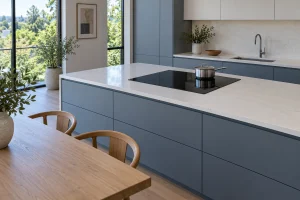
Gas, electric and induction cooktops set into the counter: how the LG lineup is laid out, where the label hides and what…

Specialized LG Appliance Repair in San Francisco
Mon–Sat: 8:00 AM – 7:00 PM
Burners that click, zones that stay cold or controls that go silent get traced to a cause before anything is replaced.
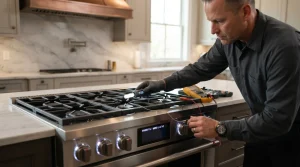
A cooktop gives you very little to hide behind: a burner either lights or it does not, a zone either heats or it stays cold. That makes problems easy to notice and, with the right questions, quick to narrow down. Our LG cooktop repair covers gas, electric radiant and induction units set into San Francisco and Bay Area counters, from compact flat kitchens to large open-plan remodels.
Gas models fail in recognisable ways. Burners that click on and on, burners that light unevenly, a flame that lifts or turns yellow, and an igniter that sparks but never catches. Spills that run under a burner cap and dry on the electrode are the most frequent trigger, so a technician starts by seeing whether the burner base and cap are clean and seated before judging the spark module or the gas path. Our post on a burner that keeps clicking covers the owner-safe part of that story.
A zone that stays cold, a zone that never turns off, or glass with a visible crack are the headline problems. Behind them sit the surface element, its limiter, the switch or touch control that feeds it, and the wiring in the junction. Dual or bridge zones add one more thing to test.
Induction heats the pan, not the glass, so complaints sound different: a zone that pauses or shuts off mid-cook, a pan that is not detected, a fan that stays loud, or an error that appears the moment you boil something over. Pan material and size matter, which is why we ask what you were cooking in. Read why an induction cooktop shuts off for the usual reasons.
Water, grease or a metal utensil resting on the controls can make the whole panel ignore you. If cleaning and drying does not help, the panel or the board behind it is the next suspect. The guide to touch controls not responding lists the checks in order.
The technician reproduces the problem first: lights the burner, switches on the zone, watches the display. For gas, the check follows the path from the control knob to the spark and then to the flame. For electric and induction, the check follows the signal from the touch control to the element or coil and compares what the cooktop reports with what it actually does. Only then is a part named. You receive the finding and a written estimate, and nothing is replaced until you say yes.
LG cooktops with a display use simple numbered codes, and each one has a meaning listed on this site.
Code 4 is the one owners can often influence: clear the surface, dry it, and see if it returns. The others call for a visit.
Leave the glass top, burner box and connections alone.
A gas smell means leave, no switches, and call the gas utility or 911 from outside. Sparks, burning smells or a cracked glass surface mean turn the power off at the breaker and stop using the cooktop. A zone that will not turn off should be switched off at the breaker as well.
Burner sets, caps and boards differ by size and version, so the model number saves a return trip. Cooktops usually carry the label on the underside or on the trim, which is hard to read once installed, so a photo from the box, the manual or your records helps. See how to find the LG model number. Electric units such as the LCE3010SBE and LCE3610SBE, plus gas cooktops like the 30-inch LCG3011BD and the 36-inch LCG3611ST.
Send the symptom, the model number if you have it, and the address. We confirm the visit, ask you to clear the counter around the cooktop, and the technician works through the checks above. You hear what was found, receive a written estimate and approve or decline. If a part has to be ordered, you are told before the technician leaves.
The lineup is described in LG cooktops. If the cooktop is part of a range, see LG range and oven repair.
Moisture or food residue around the electrode or a cap that is not seated can keep the igniter firing. Turn the burner off, let it cool, clean and dry it, and reseat the cap.
No. It needs cookware that responds to the magnetic field and sits flat over the zone. A pan that does not match can trigger pauses or shutoffs.
Stop using it and switch it off at the breaker. A crack can let liquid reach the electronics, so have it looked at before cooking again.
Yes, including induction units, in San Francisco and the Bay Area.
You approve the work after the diagnosis and written estimate. Nothing is repaired without your say.
Gas, electric and induction cooktops set into the counter: how the LG lineup is laid out, where the label hides and what…
Water that will not drain, a door that will not latch or dishes that stay dirty? We diagnose LG dishwashers across San…
Long cycles, no heat or a dryer that will not start? We repair electric, gas and ventless LG dryers around San Francisco…
Over-the-range LG microwaves diagnosed in San Francisco and the Bay Area, covering heating, turntable, door, vent fan and keypad faults, with a…
Gas, electric and induction LG ranges and wall ovens diagnosed in San Francisco and across the Bay Area, with a written estimate…
Warm food, frost, leaks or a slow ice maker on an LG refrigerator? We diagnose first, give a written estimate and repair…
LG Styler steam closets diagnosed in San Francisco and the Bay Area: steam, door, airflow and sensor codes, with a written estimate…
Front-load, top-load, SideKick and WashTower: we trace drain, door, noise and leak problems on LG washers across San Francisco and the Bay…
Share a few details and we’ll confirm an appointment. Prefer to talk? Call us and we’ll help right away.