

Specialized LG Appliance Repair in San Francisco
Mon–Sat: 8:00 AM – 7:00 PM
A breaker that flips every time an appliance starts is a safety signal. Learn the difference between overload, ground fault and a failing part, and what to leave alone.
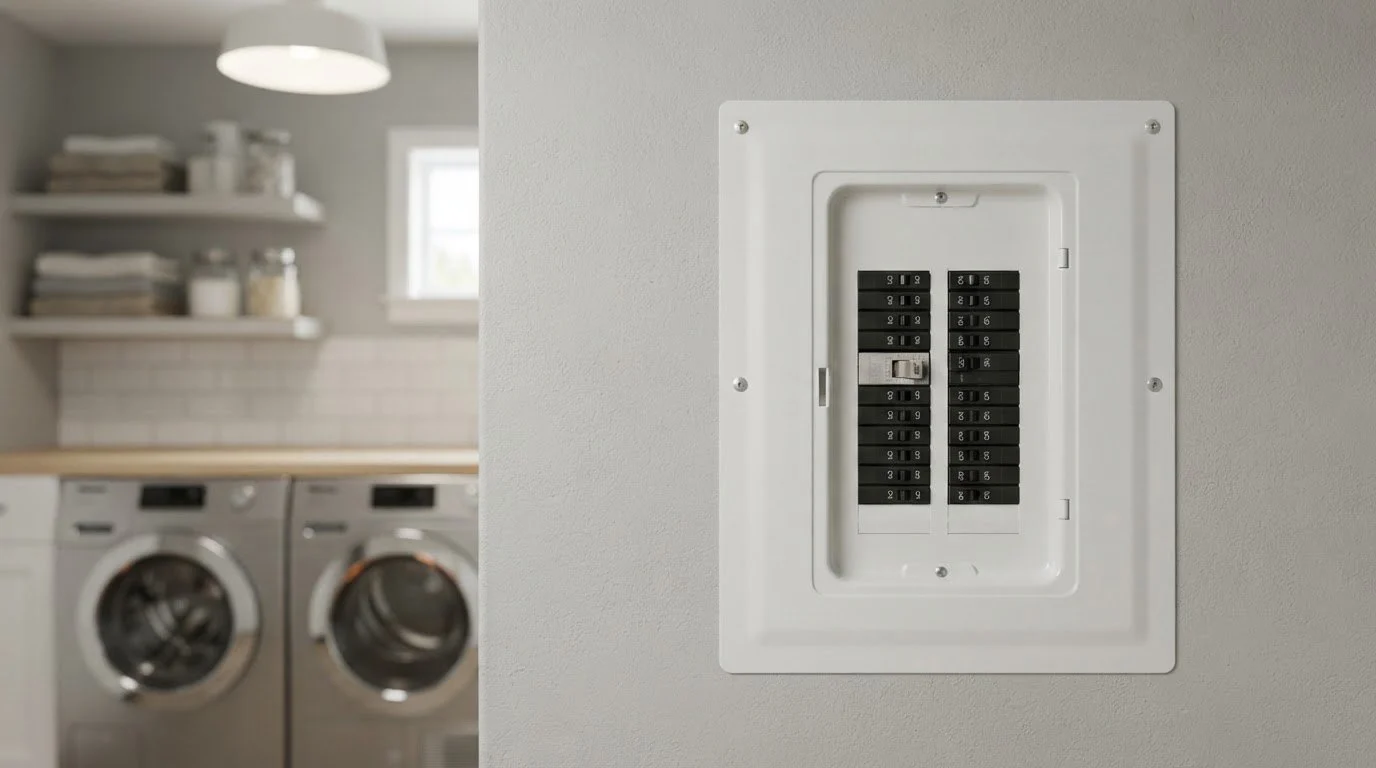
The kitchen goes quiet, the lights are fine, and one switch in the panel has dropped to the middle position. Breakers and ground-fault outlets exist to stop electricity before it heats a wire or hurts someone. When an appliance trips one, the right response is to find the pattern, not to keep resetting until it holds.
Too much load on a shared circuit. Two big appliances starting at once, a microwave and a toaster on the same line, or a dishwasher and a disposal running together can add up. An overload trip typically happens when something else is running, and the appliance behaves normally on its own circuit. Older San Francisco flats frequently share a single kitchen circuit across several outlets, which makes this common.
Current leaking to ground, usually through water or damaged insulation. GFCI outlets and breakers trip quickly on this. Kitchens, laundry areas, garages and bathrooms are protected for that reason. If an appliance trips a GFCI instantly each time it starts, something inside is likely leaking current.
A failed motor winding, a heating element or igniter with damaged insulation, a worn cord, or a control board fault can draw heavy current and trip the breaker the moment the part is energized. The tell is that the same appliance trips the same breaker at the same point in its cycle.
Write down the answers. They save time on the visit and often narrow the cause before any tools come out.
A dryer that trips a double breaker may have a heating-side fault, and the nP code, no current detected at the heater, usually points at the home wiring side. Another dryer clue is PS, improper voltage from the power cord, which can come from how the cord is connected. A washer that trips when it drains or spins may have water where it should not be. A refrigerator tripping a GFCI at night can reflect a defrost heater leaking current. A dishwasher that trips when it heats suggests an element issue; the HE code covers heater trouble. These are possibilities and not diagnoses, and our technician checks each by measurement.
Do not replace the breaker with a larger one, tape down a breaker, bypass a GFCI, or use an extension cord to avoid a problem outlet. Do not open the appliance, the junction box or the panel. Do not try to test wiring with a meter unless you are trained to do so. If you smell burning, see sparks or discoloration at an outlet, switch off the breaker and leave the appliance off. If a gas appliance is involved and you smell gas, leave the home, avoid switches, and call the gas utility or 911 from outside.
If an appliance trips the breaker alone on its circuit, that points to the appliance. If the circuit trips with nothing connected, the problem is the wiring, and an electrician is the right professional. We can tell you which side the fault is on after diagnosing. We explain our findings, provide a written estimate and repair nothing without approval. Have the model number ready; this guide shows where to find it. Visit details for common families: LG dryer repair, LG washer repair, and LG range and oven repair. Power loss that leaves a machine dead instead of tripping is covered in another guide, and the symptom index at common problems helps you find related topics.
In older houses and flats, circuits were laid out for a time when kitchens had fewer large appliances. Lights, outlets and a refrigerator may share one run, and dryers or ranges may hang off older wiring. Newer protective devices are also more sensitive than old breakers, so an appliance that never caused trouble in the past can begin to trip a freshly installed GFCI. That does not mean the appliance is faulty; it can mean the protection is now doing a better job, and the diagnosis has to separate the two.
If tenants report repeated trips, ask which appliance is involved and when it started. Note the panel label for that circuit. Provide those facts when you request service, along with the model number, so the technician can tell quickly whether to look at the appliance or recommend an electrician for the building side.
One reset to test is reasonable. Repeated resets can overheat wiring or damage the appliance. If it trips again, leave it off.
A standard breaker protects against overload and shorts. A GFCI also detects current leaking to ground, which can mean moisture or damaged insulation.
Yes. Adding a heavy load to a shared circuit is a common reason. A separate circuit may be needed, and that is electrician work.
We repair LG appliances. If the diagnosis points to your home wiring, we tell you so you can call a licensed electrician.
It is a useful clue. Tell the technician exactly when it happens so they can focus on the heating side of the machine.
Share a few details and we’ll confirm an appointment. Prefer to talk? Call us and we’ll help right away.