

Specialized LG Appliance Repair in San Francisco
Mon–Sat: 8:00 AM – 7:00 PM
The top unit of a WashTower tumbles but the clothes stay damp and cool. Here is how vents, filters, drain issues and sensors can all look like a heat problem.
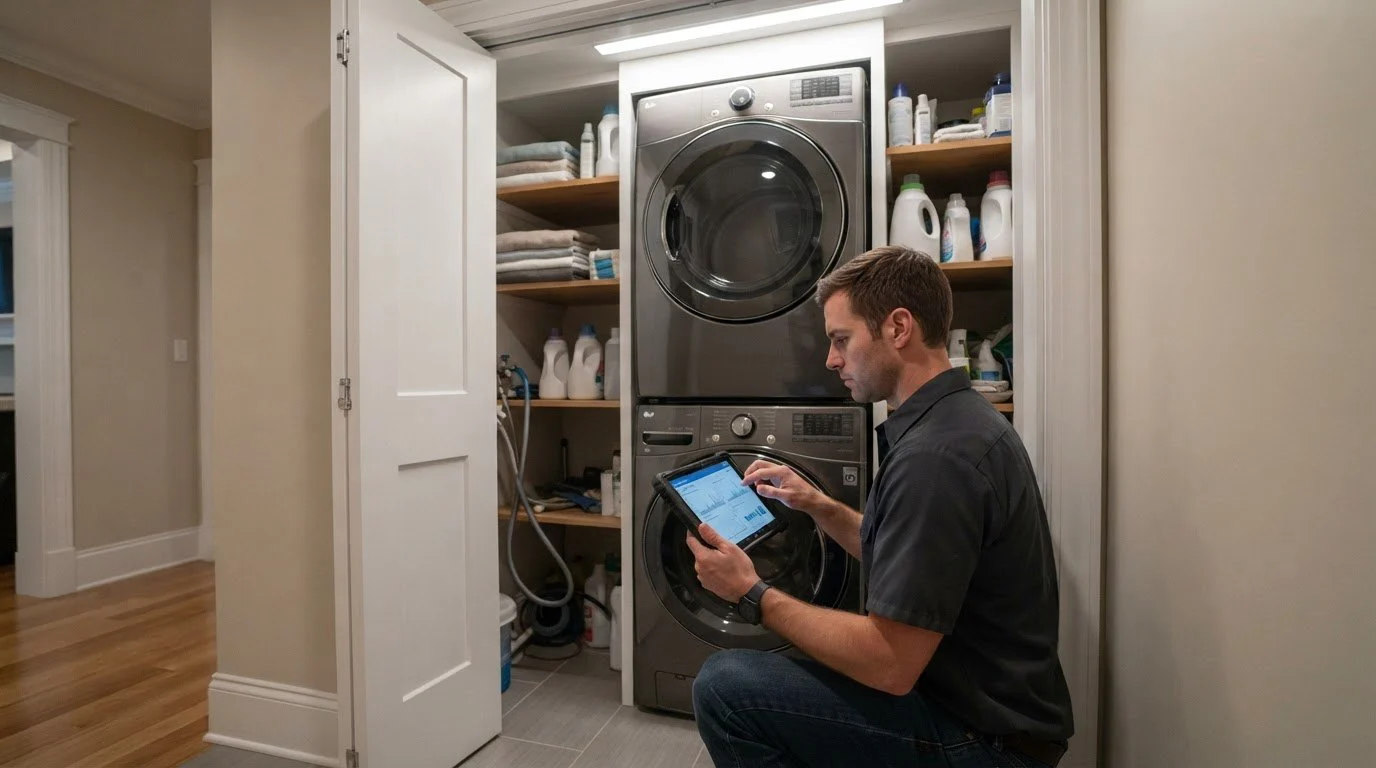
The WashTower stacks a washer and a dryer into a single tower, which is why you see it so often in condos, laundry closets and narrow hallways around the Bay Area. The upper dryer in a tower is usually a ventless, heat-pump style, though it varies by model, and that changes how you think about a no-heat complaint. Without a hot element glowing in the base, the drying work is done by a refrigeration-style loop that moves heat from air to coils, and it depends on clean airflow and a clear drain for the water it pulls from your clothes.
People use that phrase for several different things. The drum may turn and the air may feel cool. The cycle may end after a very long time with damp clothes. The display might show a countdown that keeps stretching. Or the dryer might stop early and show a code. In a heat pump dryer, warm is not the same as hot; the exhaust air feels mild compared with a traditional dryer, and clothes dry more slowly at a lower temperature. So the first question is not “is it hot” but “is it drying at all, and how does it compare with before.”
A packed lint filter is the leading cause. When the filter is blocked, air cannot circulate through the heat exchanger, and the dryer works hard without drying. If the display reads F0, the filter is not seated properly, and IF says the filter was not detected on WashTower dryers. Pull the filter, rinse off the film of lint with water and let it dry, then reseat it fully.
The moisture removed from the laundry has to go somewhere. On a WashTower that is the drain hose or a tank. The code drn covers a drain hose that is pressed, installed too high or frozen, and nd covers no drain, such as a clogged hose or debris filter. When the unit cannot get rid of its condensate it stops or reduces drying. Check that the hose runs freely and is not pinched behind the tower, which is easy to do when the unit is pushed back into a closet.
A heat pump dryer sheds heat into the room. In a tiny, closed closet with no air exchange the temperature climbs and performance falls. Leave the door open or louvered, and keep the surrounding area clear.
On WashTower dryers the code LE2 refers to a compressor problem, LE3 to the air circulation motor, and LE1 to the drum motor not rotating. These need a technician; the owner step is to note the code and stop running cycles.
Temperature sensors help the control manage the cycle. The thermistor codes tE1, tE2 and tE4 cover those fault families, and HS covers the humidity sensor, which can make a cycle run far longer than normal.
Do not move the tower, open the top or back, or try to reach the condenser. A WashTower is heavy, and its washer and dryer share parts of the structure.
If the filter is clean, the hose is free, the room is ventilated and clothes are still wet, or if any compressor, motor or thermistor code appears, schedule a diagnosis. Tell us the model number; the label is usually inside the dryer door opening. The visit begins with diagnosis, ends with a written estimate, and no repair happens without your approval. Read more on LG dryer repair and the family overview LG dryers. If you have a ventless unit like DLHC3602 or DLHC6702, much of this advice carries over.
Many towers sit inside shallow closets that were designed for a side-by-side pair. If the drain hose goes through a cutout, check that it is not folded where it leaves the wall. If the tower sits on a pedestal or platform, make sure it is level, since a tilted cabinet can stop condensate from reaching its exit. In shared laundry rooms, keep the area behind the unit free of boxes and linens. A tower with a single power feed can also show odd symptoms when the outlet is loose or the cord is pinched; reseat the plug only if it is accessible without moving the cabinet.
We start by asking about the symptom: how long the cycle takes, what the clothes feel like, and what the display shows. Then the technician checks airflow, drain path, sensors and the heat pump side in order, instead of replacing parts to see what happens. After that you hear what failed and what a repair involves, with a written estimate. You decide whether to go ahead.
Heat pump style dryers produce gentler warmth than a conventional element dryer. Judge it by how well clothes dry compared with earlier, not by touch alone.
They are separate machines in a single tower, but they share the cabinet and the same installation space. A pinched drain hose or poor ventilation in the closet can affect the dryer.
A clogged filter, blocked airflow, or a humidity sensor issue can all stretch the cycle. Clean the filter and check for the HS code.
Often yes, but if a leak or a power fault is involved, stop using the whole tower. Ask us when you book.
Not for the diagnosis. The technician will tell you if a repair requires more access, and nothing proceeds without your approval.
Share a few details and we’ll confirm an appointment. Prefer to talk? Call us and we’ll help right away.