

Specialized LG Appliance Repair in San Francisco
Mon–Sat: 8:00 AM – 7:00 PM
Plates come out damp and plastic still has droplets? Wet loads usually trace to drying settings, the vent, loading habits or a heater and fan issue.
Wet glasses and puddles on top of bowls are one of the most common complaints in any kitchen with a modern dishwasher, and it is often not a defect at all. Drying in a dishwasher is a slow process that depends on heat, airflow and the way dishes are shaped. Still, when a machine that used to dry well begins to leave everything damp, something has changed, and the change is worth tracking down.
After the final rinse the machine has to remove a film of water from every surface. Some designs lean on residual heat in the dishes and tub; the water evaporates and the vapor leaves through a vent or condenses on the tub wall and runs down. Others add a heating element at the base, and models in the Dynamic Heat Dry group also move air with a fan. Whatever the design, the end of the cycle depends on three things working together: heat, moving air, and a clear path for moisture to escape.
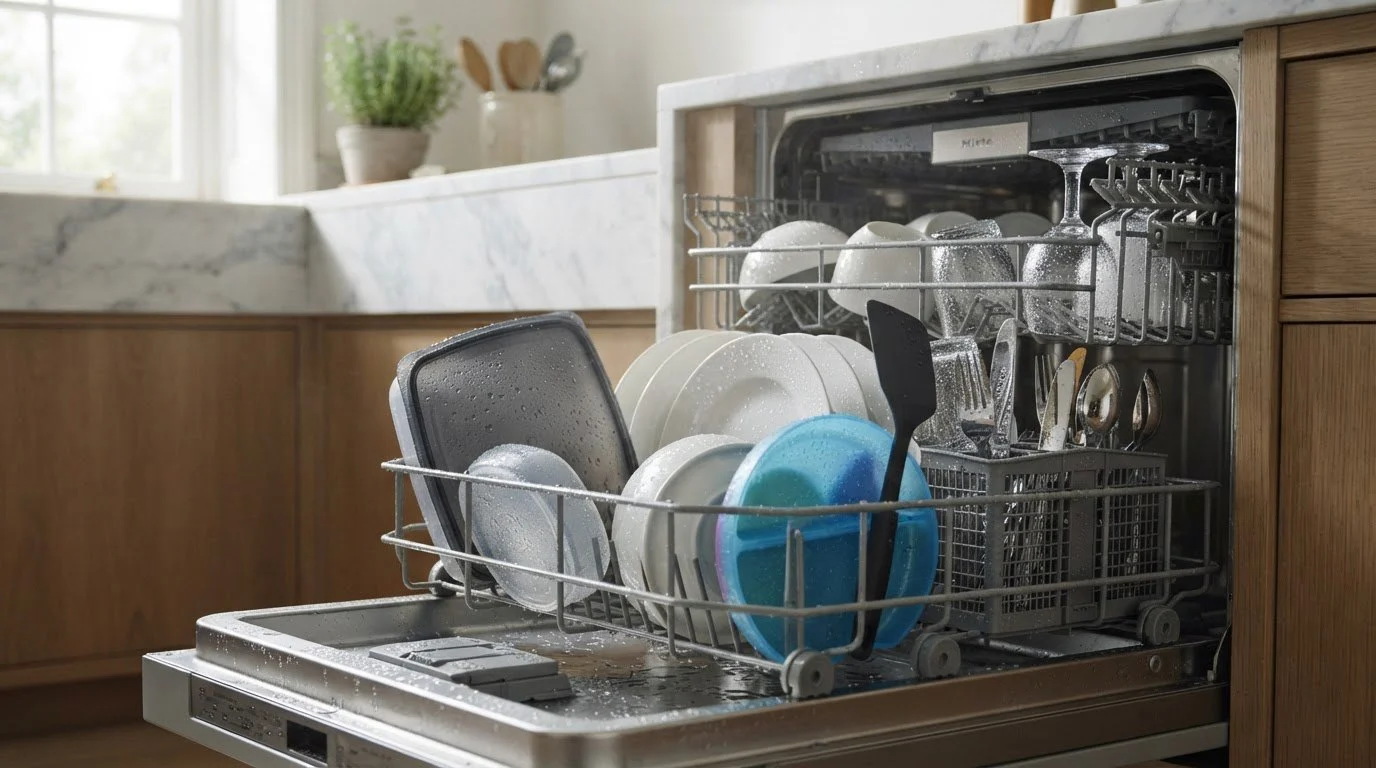
Plastic is the usual exception. Cups, containers and plastic lids hold less heat than glass or ceramic, so water beads on them and stays. A little damp plastic in an otherwise dry load is normal behavior and should not by itself trigger a service call.
If a heated dry or extra dry option exists on your panel and was switched off, the load will come out wetter. Rinse aid matters just as much: it lowers surface tension so water sheets off instead of clinging. An empty rinse-aid dispenser is the number one reason glasses come out spotted and wet, and refilling it takes seconds.
Cups tipped upward, bowls facing flat, and nested dishes all trap water in pockets. Angle items downward, leave gaps, and keep a bowl from covering another. Overloading blocks the airflow and the spray, so nothing dries properly.
If the drain is slow, the tub still holds moisture when drying starts. Look at the tub floor after the cycle. Standing water points to a clogged drain screen, a blocked drain hose, or a disposal connection issue, and the OE code means the tub did not drain fully. That is a drain problem first and a drying problem second.
A heating element that no longer warms the water leaves dishes cool at the end, and the HE heater error exists for this. A temperature sensor that misreports can shorten or skip the heated phase, which is what tE signals. On Dynamic Heat Dry units, F31 flags a dry fan that is not turning and F35 flags temperatures the machine cannot measure during the dry phase. A code on the display is a strong hint that the drying hardware, not your loading, is the cause.
A gasket that is torn or folded, or a door that does not close squarely, lets humid air out early and cool air in. If you often find water dripping along the door edge or the cabinet front, close the door slowly and watch that the gasket seats evenly all the way around.
If a clean, level, correctly loaded machine with rinse aid and the right settings still leaves everything wet, and especially if the inside feels cold at the end of the cycle, the heater, fan or sensor may be at fault. Do not take the machine apart. A technician can test each part in turn, which is faster and safer than guessing. If you also notice that the dishes are dirty and not only wet, compare with the upper-rack cleaning guide, because a weak spray and weak drying sometimes share a cause. Smell is another clue; the odor guide covers moisture that lingers in the tub.
When you ask for a visit, give the model number, the settings used, and whether you see standing water or codes. We diagnose first, explain what we found, provide a written estimate and repair nothing without your approval. More on how these visits work is on our LG dishwasher repair page, and the family overview sits at LG dishwashers. If the model plate on your door is hard to read, this guide to locating it helps. Models we see often include LDNTC326 and LDNPQ44H.
Run a plain test. Put in a handful of clean glasses and bowls, add rinse aid, use the normal cycle with heated dry if offered, and open the door when the end tone sounds. Glass that is hot to the touch but covered in droplets points toward airflow or rinse aid. Glass that is only warm and tub walls that feel cool suggest the heat phase did not do its job. Dishes that are both wet and gritty suggest the wash itself is weak, which is a different problem.
Plastic holds less heat than glass or ceramic, so droplets stay on it. That alone is normal. Place plastic on the upper rack, tilt it so water can run off, and towel dry if needed.
Yes. It helps water slide off surfaces so less is left to evaporate. If the dispenser is empty, dishes will usually come out wetter and spotted.
The steam inside can be hot, so open it carefully. Letting the door rest slightly open after the end tone is a common way to help drying along.
Possibly. Heater, temperature sensor, drain and dry-fan codes all affect how well a load dries. Note the exact code and tell us when you book.
Not necessarily. Check rinse aid, loading and the drain screen first. If the problem repeats after those checks, a diagnosis is the sensible next step.
Share a few details and we’ll confirm an appointment. Prefer to talk? Call us and we’ll help right away.