

Specialized LG Appliance Repair in San Francisco
Mon–Sat: 8:00 AM – 7:00 PM
A sour or swampy smell from the tub is usually trapped food and stale water, not a mystery. Learn the sources and how to clear them without taking the machine apart.
You open the door expecting steam and clean plates and get a wave of something sour, musty or like a drain. It is an unpleasant surprise, and people often assume the machine is broken. Most of the time the cause is leftover food, a damp spot that never dries, or a drain that keeps a little water where it should not. A few steps usually settle it, and the tricky cases are worth recognizing early.
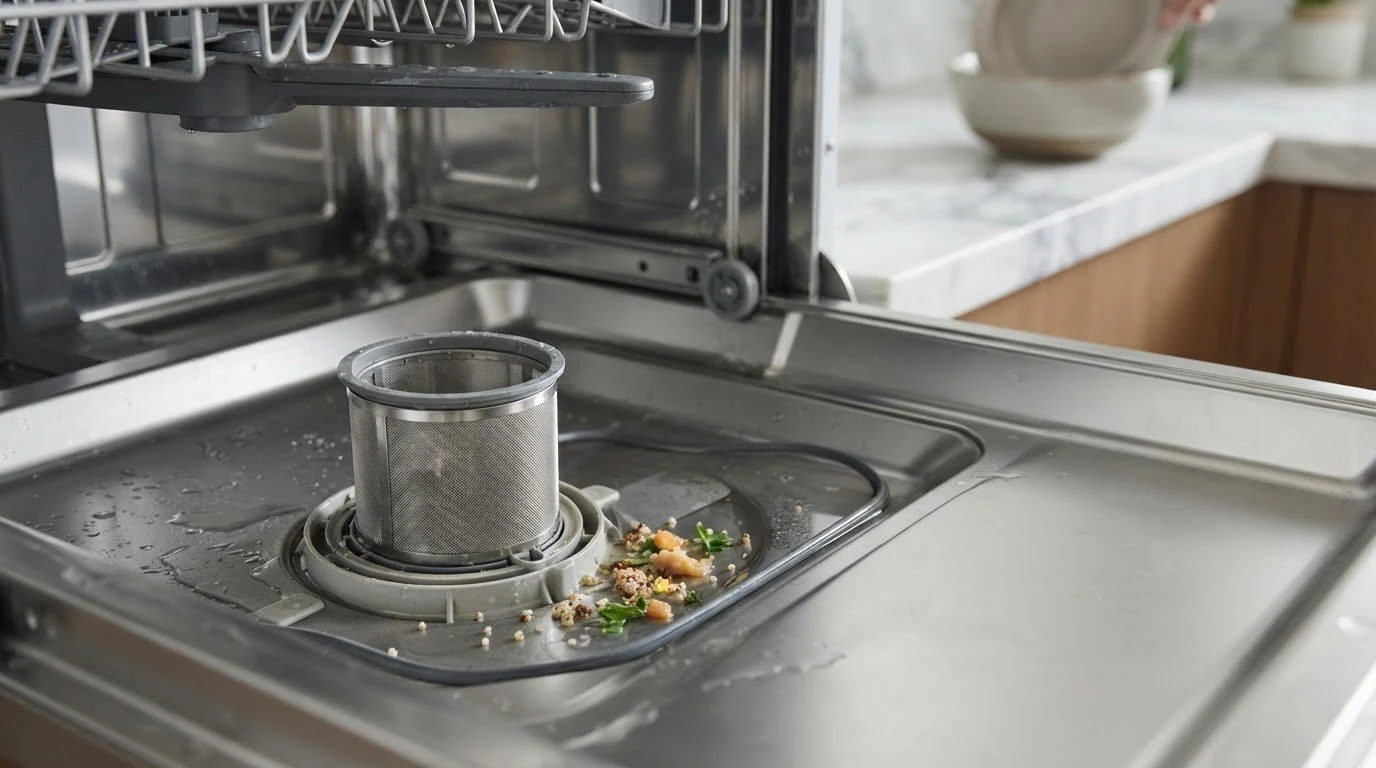
This is the classic sign of debris in the filter or on the drain screen at the bottom of the tub. Food particles sit in warm, wet conditions between cycles and begin to rot. Scraps can also hide in the spray arm holes and around the lower rack wheels.
Moisture that stays inside the machine feeds mold along the door gasket, the lower edge of the door and any folds in the seal. A dishwasher that is rarely opened to air out or that is run only on short cycles tends to develop this smell, because short cycles use less heat to flush and dry the tub.
The drain hose is typically routed in a high loop under the counter so that dirty water from the sink cannot flow back into the tub. If the loop sags, if the disposal connection is partly clogged, or if the sink side backs up, the smell comes right into the machine. When you also see water left in the bottom after the cycle, the OE drain code may appear, which is a clue that the problem is on the outflow side.
This is different from the rest. A burnt smell can mean something fell on the heating element, or a component is overheating. Stop the cycle, switch off the breaker, and do not run the machine again until it has been looked at.
Avoid mixing different cleaners, and do not pour bleach and acid-based products together. Keep hand dish soap out of the tub; it creates foam, and bE is the code for that kind of oversuds.
Scrape plates but do not feel you must pre-wash them thoroughly; a machine that senses a load uses the soil as a signal. Run the dishwasher regularly rather than letting dirty dishes sit for days. If your kitchen sink drains slowly, fix that first, since a slow sink often means a partly blocked line shared with the dishwasher. And if you live in a building where several flats share a stack, an odor that appears in every drain in the unit might be a building plumbing matter and not an appliance fault.
If you have cleaned the filter, the gasket, the arms and the screen, and the smell comes back within a few cycles, there may be water trapped in the sump or a drain path partially blocked. A leakage code like AE alongside a smell suggests water where it should not be. At that point a technician should look at the drain hose routing, the pump and the sump. Do not remove the lower panel or loosen hose clamps yourself.
When you request a visit we diagnose first, explain what we found, give a written estimate, and do nothing until you approve. Tell us the model number; the label is usually on the door edge or the inner rim of the tub, and a short how-to is here. Our LG dishwasher repair page describes the visit in detail, LG dishwashers lists the lineup, and models like SDNAH981 and LDWBC22BT are among them. If the machine also fails to dry, read the wet-dishes guide as well.
Flats and condos in older San Francisco buildings often share a drain stack between kitchens. If neighbors run water at the same moment, an air gap or loop that is slightly off can pull gurgles and odors toward your tub. A quick test is to run the kitchen sink for a while and listen near the dishwasher for gurgling. If the sink is the source, the dishwasher is just where you notice it. A property manager can have the line checked, and if the smell tracks the dishwasher alone, we can look at the machine side during a visit.
Quick wash programs save time but use less water volume and less heat to carry residue out. If you use them every day, grease and starch slowly build on the tub walls, in the filter and in the sump. Alternate with a normal cycle every so often and the tub gets a proper flush. Also resist the urge to leave the machine half loaded for days between runs, since wet food residue that sits in a closed tub turns sour very quickly.
Many owners use it, but the safest approach is a cleaner made for dishwashers and used as its label says. Never mix vinegar with bleach or other chemicals.
Warm air carries odor out when you open the door. If it smells like drain water, check the drain screen and the sink side. If it smells musty, clean the gasket and let the tub dry with the door ajar.
It can. Water trapped under the tub or in the base creates a swampy smell. If you see moisture on the floor or a leakage code, stop using the machine and book a diagnosis.
Look at it whenever you notice a smell or cloudy glasses, and as a habit every few weeks if you run the machine daily. Households that cook a lot may need to check more often.
Our work is diagnosis and repair. If the smell traces to a drain, pump or sensor issue, we find and explain it, then provide a written estimate for your approval.
Share a few details and we’ll confirm an appointment. Prefer to talk? Call us and we’ll help right away.