

Specialized LG Appliance Repair in San Francisco
Mon–Sat: 8:00 AM – 7:00 PM
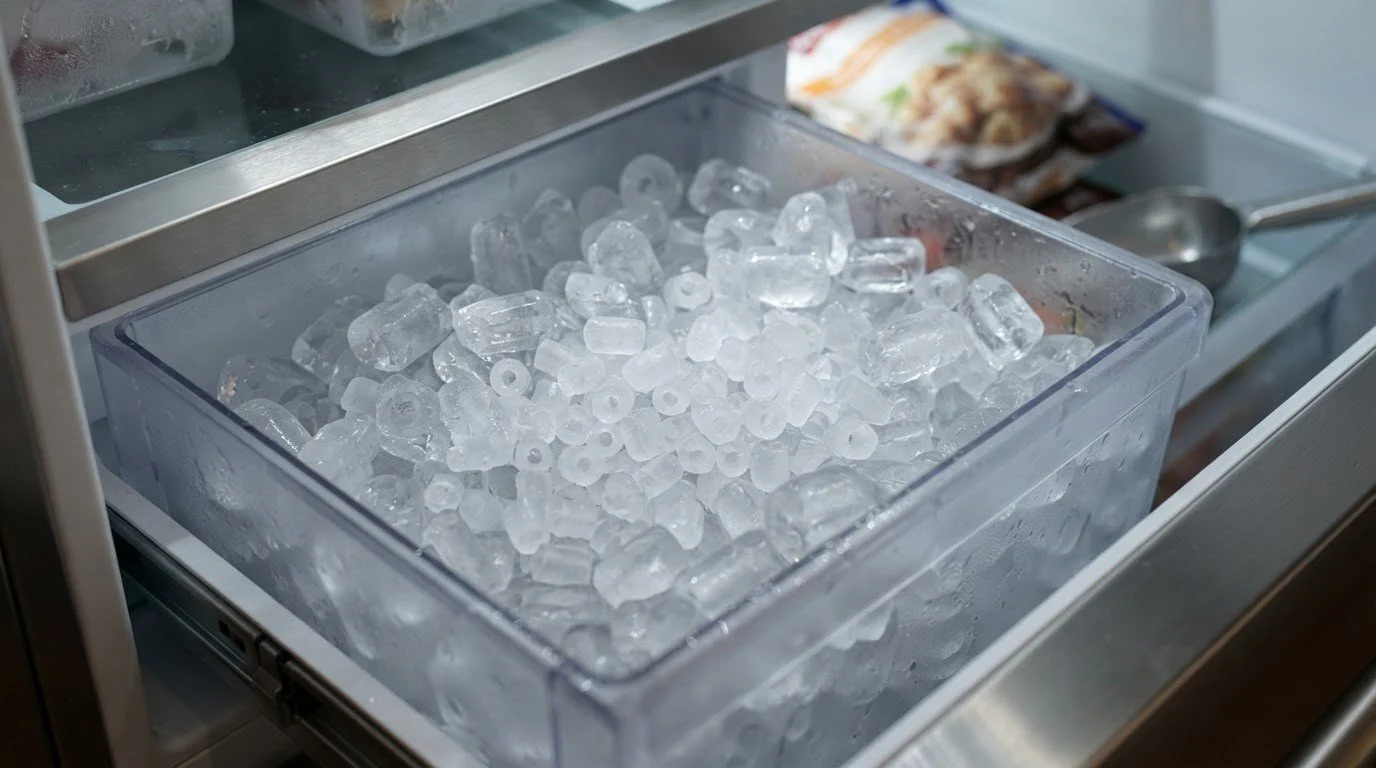
Thin, crescent-shaped or hollow ice means the mold is not filling the way it should. Here are the water and freezer causes and what a technician measures.
A bucket of ice that looks more like shells than cubes is a familiar complaint. Some cubes are half-formed, some are hollow in the middle, and some fuse into a clump that rattles in the bin. The ice maker is still working; it is just not completing the job it was built for.
Each batch needs three things: a measured fill of water, a freezer cold enough to set it, and a mechanism that harvests the finished ice at the right moment. If the water supply is weak, the mold gets short fills and the cubes come out small. If the freezer is warm, the ice never solidifies all the way through. If the harvest timing slips, half-frozen pieces drop and clump.
Do not chip ice out of the mold or the chute with a metal tool. Do not pour hot water into the ice compartment, and do not open the rear cover of the ice maker. The heating element, motor and sensor wiring in that assembly are not an owner repair, and moisture getting into the connector can turn a small job into a larger one.
We observe a full cycle: the fill, the freeze and the harvest. We compare the water volume that reaches the mold, check the freezer temperature behavior and fan operation, and test the sensor and motor. Then we explain the finding with a written estimate, and nothing is replaced until you approve it.
Ice makers sit in different places depending on the refrigerator style. A French-door unit such as the LG LBNC12231 refrigerator repair model, listed at 11.9 cu ft, has a freezer drawer arrangement, while a side-by-side such as the LG LS23C4000 refrigerator repair model keeps the maker in the freezer door side of the cabinet. The model label, usually inside a side wall, tells us which assembly to inspect.
Different shapes tell different stories. Thin, curved shells with a hole in the center usually mean the mold received only part of its water, so the supply and the filter come first. Cubes that look normal but cloudy, soft or wet suggest the freezer is not holding temperature long enough for the water to set. Pieces that fuse into slabs mean they are not being released cleanly or have partly melted in the bin. A bin that stays empty while the machine clicks suggests the harvest cycle is stuck or the sensor sees the bin as full.
Think too about how the ice is used. A household that empties the bin every evening gives the ice maker no time to settle, so partial batches stay in the stream. A household that rarely touches ice sees older ice melt and refreeze into clumps. Neither is a fault, though the second may mistakenly look like one. Emptying the bin, cleaning it and giving the machine a fresh day usually separates a use pattern from a real fault.
If a new filter and a clear supply line do not bring back full cubes within a couple of days, book a visit with our LG refrigerator repair service. The LG refrigerators guide describes ice and water features by door style.
The water did not freeze all the way through before harvest, or the fill was small. A weak supply or a warm freezer are the usual reasons.
Often, when the old filter was clogged. If not, check the valve, line and freezer door seal.
Occasional clumping happens when ice sits unused and melts slightly. Constant clumping suggests warm spells in the freezer or a leak into the mold.
Yes, but discard poor batches. If you see water pooling in the bin or the freezer, stop using the ice maker and call.
It sits inside the ice maker assembly and is not an owner service part. A code is the clue; write it down for the technician.
Share a few details and we’ll confirm an appointment. Prefer to talk? Call us and we’ll help right away.