

Specialized LG Appliance Repair in San Francisco
Mon–Sat: 8:00 AM – 7:00 PM
A sour smell in a front-load washer comes from damp rubber, detergent residue and trapped water. Learn what to clean, what to change and when a drain fault is behind it.
You open the door and a sour smell meets you. Fresh towels come out smelling flat, and a wipe of the door seal leaves a gray film on the cloth. In coastal homes and flats where the laundry sits in a closed cupboard, the humidity keeps those places damp for days.
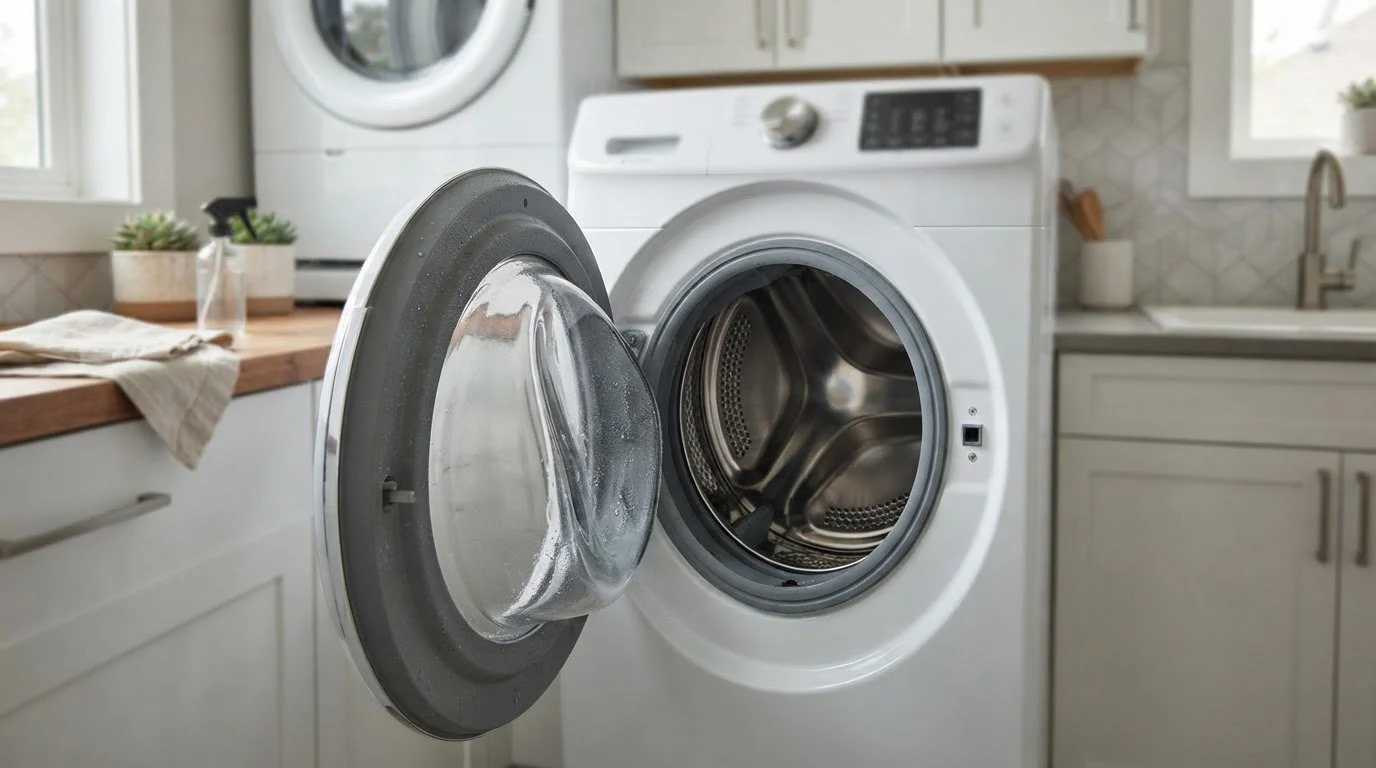
A front-load washer is sealed by a rubber gasket around the door opening. That gasket has a fold at the bottom where water collects. The detergent drawer and its housing hold damp residue. The drain pump filter and the drain hose can retain a small pool of water. And the drum itself is a closed damp box if you shut the door after a cycle. Bacteria and mold feed on soap film, lint and skin oils in those places.
Do not mix bleach with other cleaners; the fumes are dangerous. Do not pour cleaner directly onto the control panel or into the back of the cabinet. Do not remove the gasket clamp or the front panel to scrub behind it. Never use more detergent to fix a smell, since more soap creates more film.
If the smell comes back within days of a thorough cleaning, or if the drum keeps a pool of water at the bottom, the issue may be a drainage or a hose fault. A drain hose that loops too low or is jammed far into a standpipe can hold water. A drain pump that does not clear fully, or a gasket that has torn, can leave water behind. A technician checks these, along with the inlet valves for slow drips that keep the drum damp.
Installation influences odor, too. A washer in a small closet with no airflow, a stacked WashTower with the dryer venting into the same space, or a unit installed on a basement platform with a long drain run all hold moisture. If your washer is the LG WM1385H washer repair model, listed at 2.3 cu ft, the compact drum dries quickly with the door open; for the LG WM3090C washer repair model at 4.5 cu ft, the larger gasket fold needs more attention.
The cleaning steps help, but habits keep the smell from coming back. Take wet laundry out as soon as the cycle ends. Wipe the gasket after the last load of the day, especially around the bottom fold. Prop the door open a little so air moves through the drum. Pull the drawer slightly open as well. If the machine sits in a hall cupboard, leave the cupboard door open on laundry days so the room dries, and consider a vent or a dehumidifier in a closed space.
Detergent choice and amount have a large effect. Modern front-load washers use small amounts of low-sudsing detergent, and extra product does not clean better; it leaves film that holds moisture and odor. Measure by the load size, and skip fabric softener when the gasket already shows buildup. If you wash mostly in cold water, run a warmer program with a washer cleaner once in a while so residue dissolves and flushes out.
In rentals and shared buildings you often inherit a washer with years of buildup you did not cause. If the odor was there on the first day, start with the gasket and the drain filter, and tell your landlord or property manager if the gasket is torn or the drain filter will not open. Landlords can book a visit on behalf of tenants, and a written estimate makes the decision easy to share. In multi-unit buildings, a shared drain stack can also carry smells back up the standpipe, which is a plumbing matter rather than a washer fault.
Do a simple test to separate the two. Run an empty rinse and sniff the drum and the standpipe separately. If the drum is clean but the smell rises from the drain opening, the washer is not the source. If the drum itself smells, keep cleaning the washer parts above.
We check the gasket, the drawer housing, the drain pump and filter, the hose route and the standing water level. You receive a written estimate and nothing is repaired without your approval. Book through the LG washer repair page, and use the LG washers guide to see the styles we cover.
Check your owner manual first. Many cleaners suit this washer, but repeated acidic products may affect seals. A measured washer cleaner is the safer choice.
Wipe it dry after wash days and give it a proper clean every month or two, more often in a humid home.
Usually because the door stays closed or there is still standing water in the drain area. Leave the door ajar and check the filter.
Yes. Lint, coins and soap residue sit in warm standing water and create a strong sour odor.
It can transfer to fabric. Wash with a proper cleaning cycle and leave the door open before the next load.
Share a few details and we’ll confirm an appointment. Prefer to talk? Call us and we’ll help right away.