

Specialized LG Appliance Repair in San Francisco
Mon–Sat: 8:00 AM – 7:00 PM
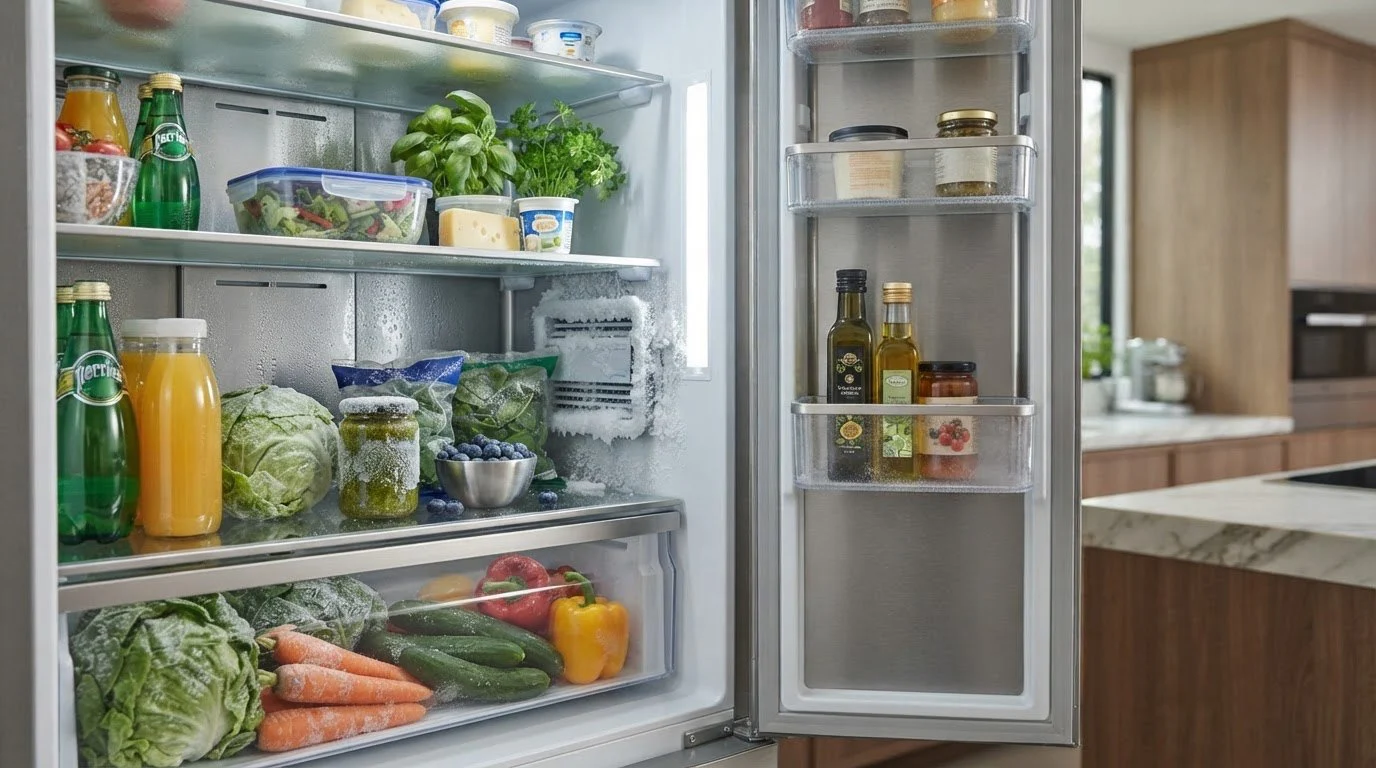
Lettuce gone glassy, milk with ice crystals, yogurt frozen solid. Here is why the fresh-food side of an LG refrigerator overcools and what a technician looks at.
You open the crisper and the cucumbers are rock hard, the eggs have a frosty shell, or a carton of juice has split along the seam. The freezer feels normal, yet the main compartment is acting like a second freezer. In most homes in the Bay Area this shows up slowly: first a few leaves of spinach look wet and translucent, then a week later the whole shelf is icy.
An LG refrigerator makes cold air in the freezer section and shares part of it with the fresh-food side through an air path. The amount that passes is controlled by a sensor reading and a damper or similar flow control. If too much cold air is allowed through, or if the sensor reports a warmer compartment than the real one, the cooling system keeps pushing cold air in and food freezes.
The same thing happens in simpler ways. Items stacked tight against the back wall or against an air outlet get blasted by cold air even when the control is working. A setpoint that was moved down during a heat wave and never moved back does the same job. These are the first things to rule out, because they need no tools and no appointment.
One controlled power reset is fine: unplug the unit, wait a few minutes, plug it back in. Do not repeat it daily; a refrigerator that needs resets to behave has a fault that resets only hide.
Do not open back panels or the freezer rear cover to reach the damper. Do not pour hot water on frost inside the unit, and do not poke at vents with a knife or screwdriver. The sealed cooling system and the wiring behind those panels are not owner territory, and a punctured evaporator ends a repair that would otherwise be routine.
On a visit we begin with the model label and the symptom history: which shelf freezes, how long it has been happening, and whether the freezer side feels normal. Then we check the airflow path, the damper movement, the sensor readings against the real compartment, and the door seal. The finding is written up with a written estimate before anything is replaced, and nothing is repaired without your approval.
The type of refrigerator matters. A side-by-side such as the LG LS23C4000 refrigerator repair model, listed at 23.1 cu ft, shares air through a vertical divider, while a top-freezer such as the LG LT13C2000 refrigerator repair model, listed at 13.2 cu ft, sends cold air down from above. The location of the outlet and the damper differs, and so does the diagnosis.
The spot where food freezes says a lot. If only the top shelf or the items against the rear wall freeze, the cold air outlet is the likely source and the fix may be as simple as spacing. If the entire compartment runs cold and the freezer is also colder than usual, the control is calling for too much cooling, which points to a sensor reading or a board decision. If one drawer is icy while the rest is fine, look at what is stored there: crisper drawers with a closed humidity vent can trap cold air against produce.
Timing matters as well. A refrigerator that freezes food mostly at night may be reacting to a cool kitchen: a cold room lets the unit run less, and the control compensates in ways that can overshoot in the fresh-food side. A refrigerator that freezes food only after a long door-open period, such as after a big shop, may be catching up with a heavy cooling burst. Tell the technician what you noticed, because the pattern shortens the diagnosis.
Book a visit if the problem returns after you have cleared the vents and raised the setpoint, if food freezes within a day, or if a code keeps coming back. Our LG refrigerator repair service covers all door styles, and the LG refrigerators guide lists the lineup we see most often. Frozen food waste adds up quickly, so do not wait for a full crisper of spoiled produce.
Both are possible. Raise the setpoint one step and clear the vents first. If food still freezes after a day, a damper or sensor fault is more likely than a setting.
Move delicate items to the door shelves and keep an eye on them. If the compartment is also warming up at any point, move perishables to a cooler until it is checked.
The back wall is closest to the cold air outlets. Food touching it gets the coldest air, so spacing items away from it often cures a mild case.
A reset may calm a control glitch for a while, but if the cause is a damper or sensor the symptom returns. Note whether it comes back and tell the technician.
Yes. Layout decides where the air passes between compartments, so the label inside the cabinet, usually on a side wall, helps us check the right parts.
Share a few details and we’ll confirm an appointment. Prefer to talk? Call us and we’ll help right away.