

Specialized LG Appliance Repair in San Francisco
Mon–Sat: 8:00 AM – 7:00 PM
Water on the floor, a full condensate tank or damp laundry from a ventless LG dryer usually traces back to drainage, not the drum. Here is how to sort it out.
A heat pump or hybrid condensing dryer does not push moist air through a vent to the outside. It cools the air, wrings the moisture out as liquid and then has to dispose of that liquid. When something along that path slows down, the water shows up as a puddle under the cabinet, a reservoir that keeps filling, a hose that sputters, or clothes that finish the cycle cooler and clammier than they should.
This is a common call from San Francisco flats and condos where a ventless dryer was chosen precisely because there is no exterior wall to cut through. The same stacked closets that make that choice sensible also make leaks hard to spot, because the first sign is often a damp patch on a hallway floor or a stain beneath a laundry closet door.
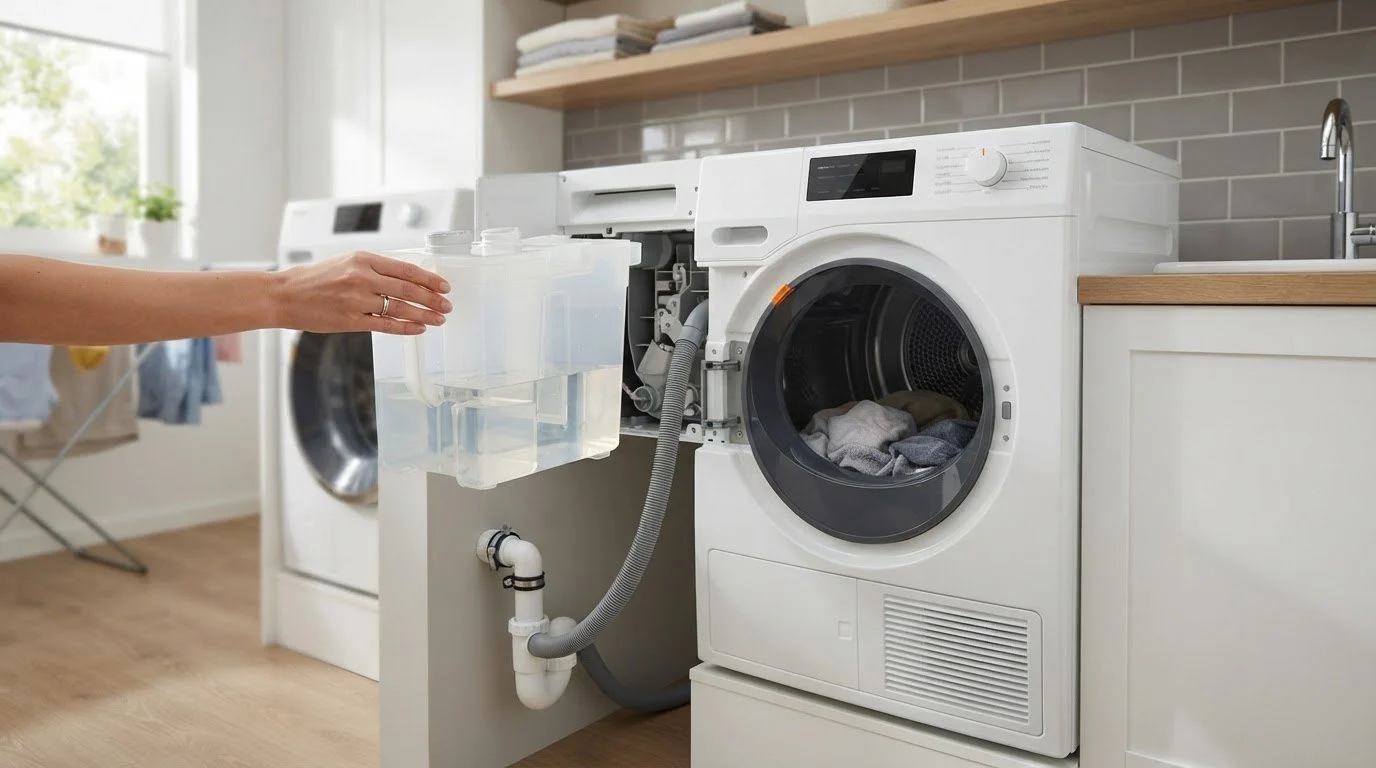
Ventless LG dryers handle condensate in one of two ways, depending on how the unit was set up. Some collect the water in a container that the owner empties, and others push it out through a drain hose to a standpipe, laundry sink or stacked washer drain. The dryer sends the water along with a small pump, so the hose can rise a little before it falls, but it still needs a clear path and a sensible route.
Knowing which setup you have changes everything that follows. A full container is simply a container that has not been emptied, while a hose that spits water onto the floor is a drainage fault. Check the back panel and the drain fitting before you decide which problem you are looking at.
Two verified LG messages are worth writing down before you touch anything. On hybrid condensing dryers, the LG dryer E13 code points to a drain hose that is kinked, crushed or clogged, or to frozen water in the sump. The LG dryer nd code means no drain, which usually traces to a clogged drain hose or debris filter, or a kinked vent hose. Neither one tells you the part to replace, but each narrows the search considerably.
That is the limit of what an owner should do. Opening the cabinet, tracing the heat pump circuit or reaching into the sump belongs to a technician, because the sealed system and the wiring around the pump are not places for a quick look.
Book a visit when the same code returns after you have cleaned and straightened everything you can reach, when water appears with no obvious blockage, when the clothes come out damp every time, or when you smell something hot. We diagnose before any repair, give you a written estimate and do nothing without your approval. Tell us whether your dryer sits in a closet, a garage or beside a washer, because the location affects both the likely cause and how we plan the visit.
Have the model label ready. On a ventless LG dryer it is usually inside the door opening. The three ventless electric models are the LG DLHC1455 repair, the LG DLHC3602 repair and the LG DLHC6702 repair pages, and each of them is described on its own page. For the wider picture, see our LG dryer repair service and the LG Dryers guide.
Yes. Pulling moisture out of wet laundry is exactly what the machine is built to do, so a steady amount of collected water after a load is expected. Trouble starts when the container overflows between loads, or when water appears anywhere else.
Cold surroundings can freeze condensate in the sump or hose. When it thaws it drains all at once. Moving the machine is not required, but warming the room and checking the hose route often explains the pattern.
It can contribute. A coated filter lets fine lint travel into the condensing section, where it can partly block the path water takes. Cleaning the filter after every load is a cheap habit that prevents this.
Only if that is how it was set up and the hose end is held firmly in place. A loose end can slip out and flood the floor, so a secure connection matters more than convenience.
A photo of the model label, a photo of the hose route behind the machine, and the exact wording of any message on the display. That lets us arrive with a plan for your particular installation.
Share a few details and we’ll confirm an appointment. Prefer to talk? Call us and we’ll help right away.