

Specialized LG Appliance Repair in San Francisco
Mon–Sat: 8:00 AM – 7:00 PM
A door that bounces open or never clicks shut keeps the cycle from starting. Racks, hinges, the catch and the switch are the usual places to look.
When you push an LG dishwasher door closed, a catch on the door meets a striker on the tub frame, and a switch confirms the door is closed. Only then does the control allow water to enter and the pump to run. A door that will not latch therefore stops everything at the start, and the machine may seem dead even though nothing inside has broken.
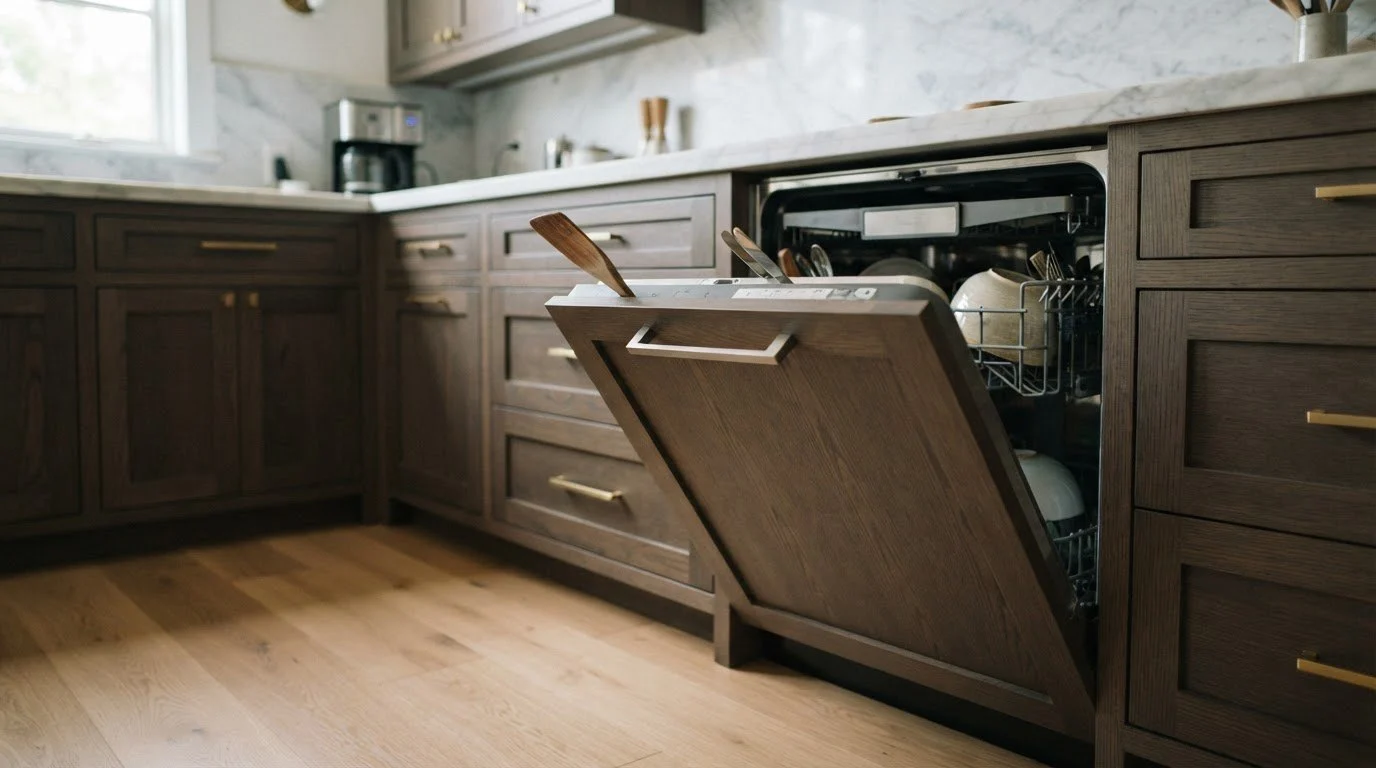
In many San Francisco kitchens the dishwasher sits flush between cabinets under a thick counter, with little room to swing the door. That snug fit means a small shift in the cabinet, a loose mounting bracket or a cabinet face that touches the door can produce the same symptom as a worn catch.
Observe before you diagnose. If the door bounces back like a spring, something is blocking it or the hinge spring is off. If the door shuts but will not stay shut, the catch or striker is the likely cause. If the door closes with a clean click but the display stays blank or the cycle will not start, the switch or control may not be reading the signal. If the door closes only when you lift it slightly, the hinges have sagged. Each pattern points to a different place.
The messages do not name the latch, so an unlatched door may show nothing or something unrelated. LG dishwasher CL only means the panel is locked, so a cycle that will not start may be a lock and not a door fault. LG dishwasher PF tells you power was interrupted and the cycle stopped. Reading these correctly keeps you from chasing a latch that works fine.
That is where owner checks end. Hinge springs are under tension, and the switch sits close to the wiring that powers the pump and heater. A slipped spring can cause an injury, and a wet latch area is not a place for experiments.
A built-in dishwasher depends on the cabinet around it. If a new counter, a floor tile project or a shifted cabinet changed the opening, the door may rub or the unit may tilt forward slightly. The mounting brackets that hold the machine under the counter can also loosen over years of vibration. Tell us if anything in the kitchen changed recently, because a latch that works for a decade and then fails often has an installation story behind it.
Finally, test the latch with the racks removed completely. If the door closes properly with empty space, the rack or the load is the culprit and no repair is needed. If it still fails, you have narrowed the problem to the door hardware, which is exactly the information we need before a visit.
Book when the empty machine still refuses to latch, when the door sags open by itself, when water seeps from the edge, or when the control stays silent after the door clicks. Do not use a dishwasher whose door will not stay closed, because hot water and steam can escape. We diagnose before repair, put the estimate in writing and wait for your approval. A photo of the door edge and the model label, usually along the tub frame or the door’s inner edge, makes the first visit more productive.
Dishwashers such as the LG LDNTC326 repair page and the LG LDWBC22BT repair page. To understand the broader service, read about LG dishwasher repair and browse the LG Dishwashers guide. If the machine starts but never fills, that story continues in LG dishwasher won’t fill with water.
The latch or switch may be marginal, and pressure provides the contact it lacks. Pressing is a sign of wear, and a technician should see it before it fails entirely.
Yes. Large cookware in the lower rack can bump the inside of the door. Rearranging it is the simplest test.
It can be. If the unit was moved after a counter or floor project, brackets may have loosened. Mention any recent work to us.
Often, yes. Dried detergent and grease slow the catch, and wiping them away restores its movement.
Unplugged or switched off is better if the door will not stay shut. You can wash by hand until the machine is checked.
Share a few details and we’ll confirm an appointment. Prefer to talk? Call us and we’ll help right away.