

Specialized LG Appliance Repair in San Francisco
Mon–Sat: 8:00 AM – 7:00 PM
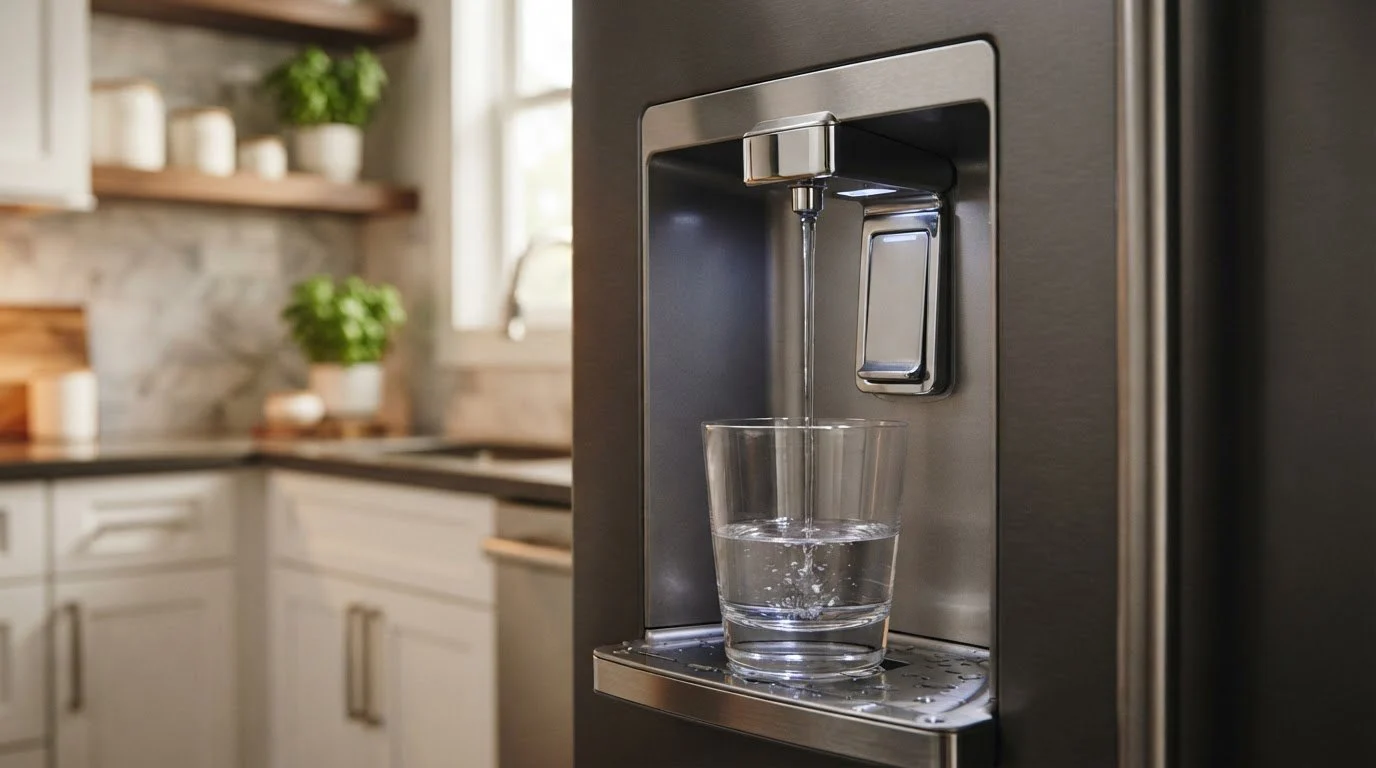
A thin trickle where a full stream used to be points at the filter, a kinked line or the supply valve. Check these before you assume the dispenser is broken.
The glass takes half a minute to fill. Water sputters, then sprays, then stops. In a Mission flat or an older Sunset row house where the cold line shares a run with the kitchen sink, you may notice the dispenser slowing exactly when the dishwasher or the tap is running. Slow flow is a supply and pathway problem far more often than a dispenser fault.
Water enters through a shutoff valve, a small supply line and an inlet valve at the back of the refrigerator. From there it travels through the filter, into a reservoir or tank, and out through the dispenser tube in the door. Anything that narrows that path, from a half-closed valve to a clogged filter to a pinched tube, slows the stream. The refrigerator also tracks flow. When the flow reading looks wrong, it can show the code explained on the LG refrigerator code gF page: a water flow sensor fault that can come from a closed tap, a kinked hose or wrong water pressure.
Do not force the plastic filter housing with tools, and do not run the dispenser dry for long periods. Do not disconnect the supply line behind the cabinet while the valve is open. Never tape or glue cracks in the water tube, because a leak behind a refrigerator can run under flooring unseen.
We confirm supply flow at the valve, inspect the line for damage, test the inlet valve and the flow sensor, and check the door tube path and dispenser switch. We also confirm the filter fits properly and the tank is seated; a code such as the one on the LG refrigerator code tt page can appear when the water tank is not seated correctly. Your approval comes before any part is replaced, and the written estimate states exactly what we found.
Models differ here. A side-by-side like the LG LS23NCP20 refrigerator repair model, listed at 23.4 cu ft, runs its dispenser line through the door, while a French-door unit like the LG LCFC26XS refrigerator repair model at 25.5 cu ft has a different tank and path.
How the water behaves tells a lot. A steady but thin stream that is the same every time suggests a restriction in the filter or the supply line. A stream that starts strong and fades means the reservoir is draining faster than it refills, which usually means weak supply pressure into the refrigerator. A stream that sputters and shoots out with air bubbles points to air in the lines. A dispenser that works for water but not for ice suggests the issue sits on the ice side, while one that fails at first use each morning may point to a frozen section in the door line.
It also helps to know how the household uses water. In some older buildings, the refrigerator line branches off the kitchen cold supply, so a running dishwasher or a washer filling nearby can starve it for a few minutes. If the dispenser recovers when other water use stops, the refrigerator is fine and the plumbing shares one narrow line. Describe this when you call because it saves a visit hunting for a fault that is not inside the unit.
If a new filter and a straight line do not restore the stream, book through our LG refrigerator repair page. The LG refrigerators guide explains which door styles include dispensers and ice makers.
Follow the reminder on your display or the label on the filter. A slow stream is a good sign it is overdue, regardless of the date.
Air trapped in the lines needs to be pushed out. Run several glasses through the dispenser and the stream should settle.
Yes. Compare with the kitchen sink. If other taps are slow too, the refrigerator is only showing a supply problem.
Not by itself, but a kinked or cracked line can both slow flow and leak. Look for dampness on the floor near the unit.
It is a water flow sensor fault, linked to a closed tap, a kinked hose or wrong water pressure. Write down the code and check the valve and hose first.
Share a few details and we’ll confirm an appointment. Prefer to talk? Call us and we’ll help right away.