

Specialized LG Appliance Repair in San Francisco
Mon–Sat: 8:00 AM – 7:00 PM
Beads of water on the door, a wet gasket line or a puddle forming under the handle. Learn where the moisture comes from and which causes need a technician.
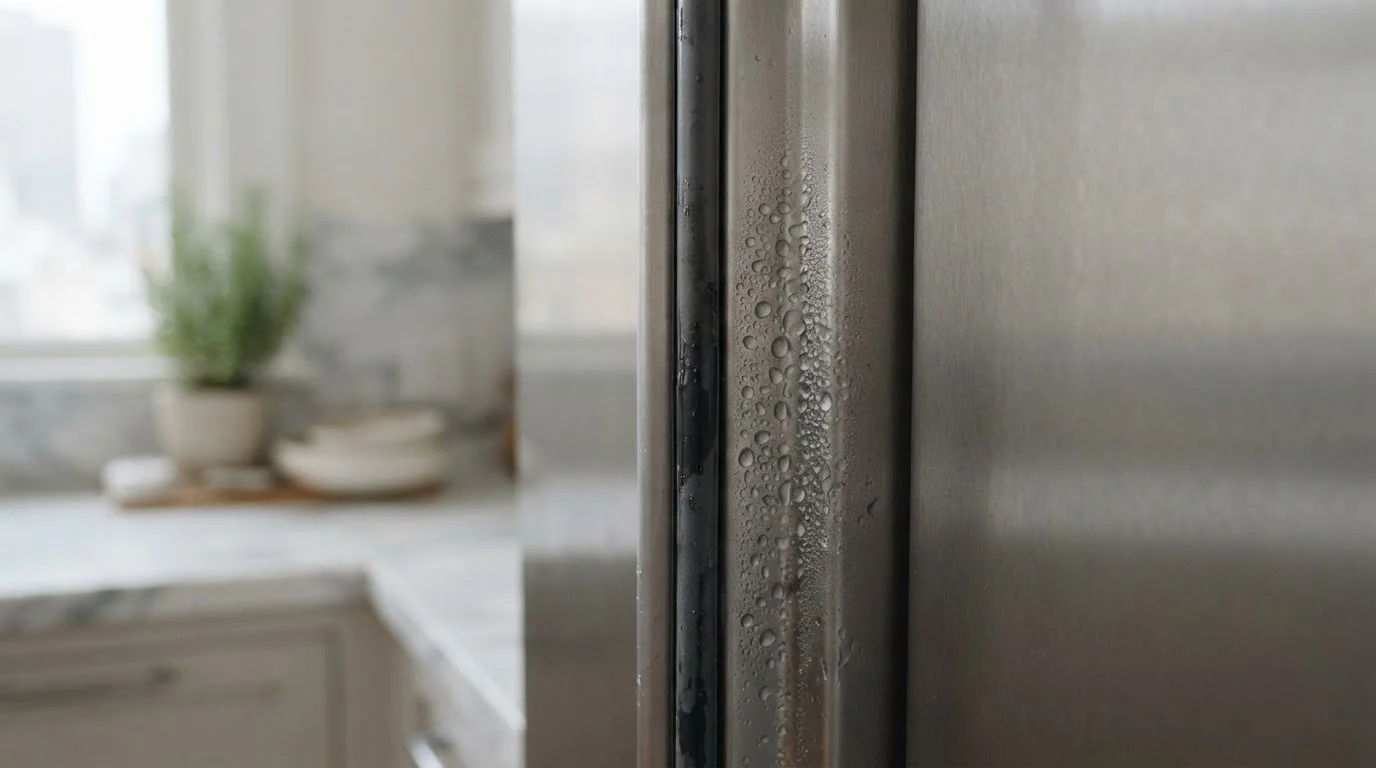
Wipe the door and an hour later the water is back. Sometimes it collects only along the gasket, sometimes across the whole face, and in a few kitchens it drips onto the floor at the corner. Condensation on a refrigerator has a simple cause: moist air meets a surface colder than the air around it. The question is why that surface became cold enough, or why more moist air than usual is getting in.
Start by deciding where the water sits. Droplets on the outer face or around the frame point to humid kitchen air and a cold cabinet edge. Droplets on the inside walls, shelves and drawers point to warm air entering through a poorly closed door or a seal that no longer touches the cabinet. Water that forms inside and then runs behind the crisper is a different job and may involve the drain, so describe it exactly when you call.
On the display, a door-related code can add information. The LG refrigerator code 67 page explains the door-not-closing-fully alert, which is a useful hint that an object or a gap keeps a door from seating.
Do not tape or caulk the gasket, and do not apply sealant to the frame. Do not unscrew the door or cabinet trim to look for heater wiring. Do not aim a hair dryer at the gasket to soften it for longer than a moment; heat can stretch it.
A technician starts with the door seal, the hinge alignment and the cabinet level. Then comes the evidence of warm air entry, such as frost on the evaporator side or a freezer that cycles constantly. If moisture appears only on a heated rail around the door, the heater circuit and its connection are tested without altering the seal. A written estimate follows any finding, and nothing is replaced without your approval.
A French-door refrigerator such as the LG LBNC15251 refrigerator repair model, listed at 14.7 cu ft, has a long vertical seam where two doors meet the cabinet, so alignment issues show up there first. A side-by-side such as the LG LS27H3230 refrigerator repair model, listed at 26.6 cu ft, has two tall seals that need to be even along their whole length.
Where the water appears gives the clearest hint. Beads along the vertical seam where the gasket meets the cabinet suggest the seal is not pressing evenly. Water across the whole door face on the coldest mornings points to a humid room and a cold surface, which a better-ventilated kitchen can reduce. A wet strip at the bottom edge of the door, where moisture drips and collects, suggests runoff from higher up, so look up the door for the source. Water on the floor under the corner with a dry door face means the moisture has traveled from inside, and a drain or water line deserves attention.
Also consider the season. During cool damp spells near the water, houses with little ventilation hold moisture, and an appliance in a closed alcove makes it worse. In such places the cure is airflow, not parts. During warm spells the condenser works harder and the cabinet edges get warmer, so condensation eases. If the water comes and goes with the weather, the refrigerator may be fine and the room is the issue.
Call if the gasket looks torn, if moisture persists after you have cleared the door and cleaned the seal, or if water is running onto the floor. Our LG refrigerator repair team handles seals, hinges and heater circuits. See the LG refrigerators overview for what is covered by door style.
On foggy, humid mornings a light film on the outside of a cold door can be normal. Water that returns within minutes of wiping or that drips to the floor deserves a closer look.
Yes. A leaking seal lets warm moist air in, which condenses on cold shelves and walls and can freeze into frost near the door.
If you can pull it cleanly it is possible, but alignment matters. Have the cabinet level and the hinges checked at the same time so the new seal does not fail the same way.
Handle pockets are cold, thin spots on some doors. A cold pocket plus a humid room explains it. If it gets worse, mention it to the technician.
Not always. A door-ajar alert may appear if the door is not seating, but a worn gasket can leak without any code.
Share a few details and we’ll confirm an appointment. Prefer to talk? Call us and we’ll help right away.